The Executive Short Version: Traditional digital marketing agencies operate on a hidden financial incentive: the more fragile your website is, the more money they make every month in recurring “maintenance retainers.” By assembling websites out of heavy, pre-made themes overloaded with 45 third-party plugins, agencies ensure that software updates break your forms and databases every sixty days. In contrast, clean semantic code runs flawlessly for years with zero plugin conflicts and near-zero carrying costs. Here is the practitioner breakdown of the Retainer Trap in 2026.
Important: Search visibility, enquiries, conversion, costs and revenue vary by market, offer, competition, execution and other factors. Examples are for planning only and are not guarantees of results.
Look at the monthly invoices of many small business owners and trade contractors in Ontario:
You open your monthly billing statement from your digital agency:
- Monthly Website Maintenance & Security Care Plan: a variable amount to a variable amount / month.
- What do they actually do for that a variable amount? ○ They log into your site once a month and click "Update All Plugins." ○ They send you an automated PDF report showing server uptime. ○ If a plugin update breaks your contact form, they bill you an additional a variable amount/hour to "investigate and fix
the emergency conflict.”
You ask yourself: “Why does a simple 5-page website require a variable amount a year in maintenance just to keep its doors open?”
Here is the plain truth from fifteen years in web engineering: traditional agencies deliberately build fragile websites because stability destroys their recurring revenue model.
Think about an unscrupulous auto mechanic:
- If an honest engineer fabricates your exhaust out of solid industrial stainless steel, it lasts for twenty years without a single service visit.
The web design agency industry operates on the exact same financial conflict.
Let’s dismantle the mechanics of the Retainer Trap and examine why clean semantic code gives business owners complete financial freedom.
1. The Retainer Trap: How Fragility Is Engineered
To understand why agencies hate clean code, look at their underlying business economics:
THE AGENCY RETAINER VS. CLEAN CODE MATRIX
When an agency builds your website on a visual drag-and-drop page builder:
- They install 35 to 50 third-party plugins created by different anonymous developers around the world.
- Every time WordPress or PHP updates, three of those plugins conflict with each other, breaking your checkout forms or mobile layouts.
- The agency tells you: "You see? This is why you need our a variable amount/month maintenance retainer to protect you!"
They created the structural fragility, and then charged you a monthly subscription to manage the chaos they built.
2. The 4 Tactics Agencies Use to Create Artificial Dependency
Watch out for these four common agency tactics designed to keep you trapped in paid retainers:
1. The Plugin Overload Architecture
Agencies use plugins for basic features that should be hand-coded in three lines of CSS (e.g., custom fonts, click-to-call buttons, mobile menus). Each plugin adds heavy JavaScript payloads, dragging mobile speeds down to 4.5 seconds and failing Google Search Central Core Web Vitals.
2. The Closed Proprietary CMS Lock-In
Some agencies build your website on their own internal, proprietary website platform. If you ever try to cancel your monthly retainer, they delete your website and database, leaving you with zero assets.
3. Obfuscated Administrative Backends
Agencies restrict your administrative permissions, forcing you to submit paid support tickets just to change a phone number, update holiday business hours, or upload a job site photo.
4. Hostage Domain Registrations
Agencies register your domain name in their agency’s corporate account instead of your legal name, holding your brand equity hostage if you ever dispute an invoice.
3. Clean Semantic Code: The Anti-Retainer Architecture
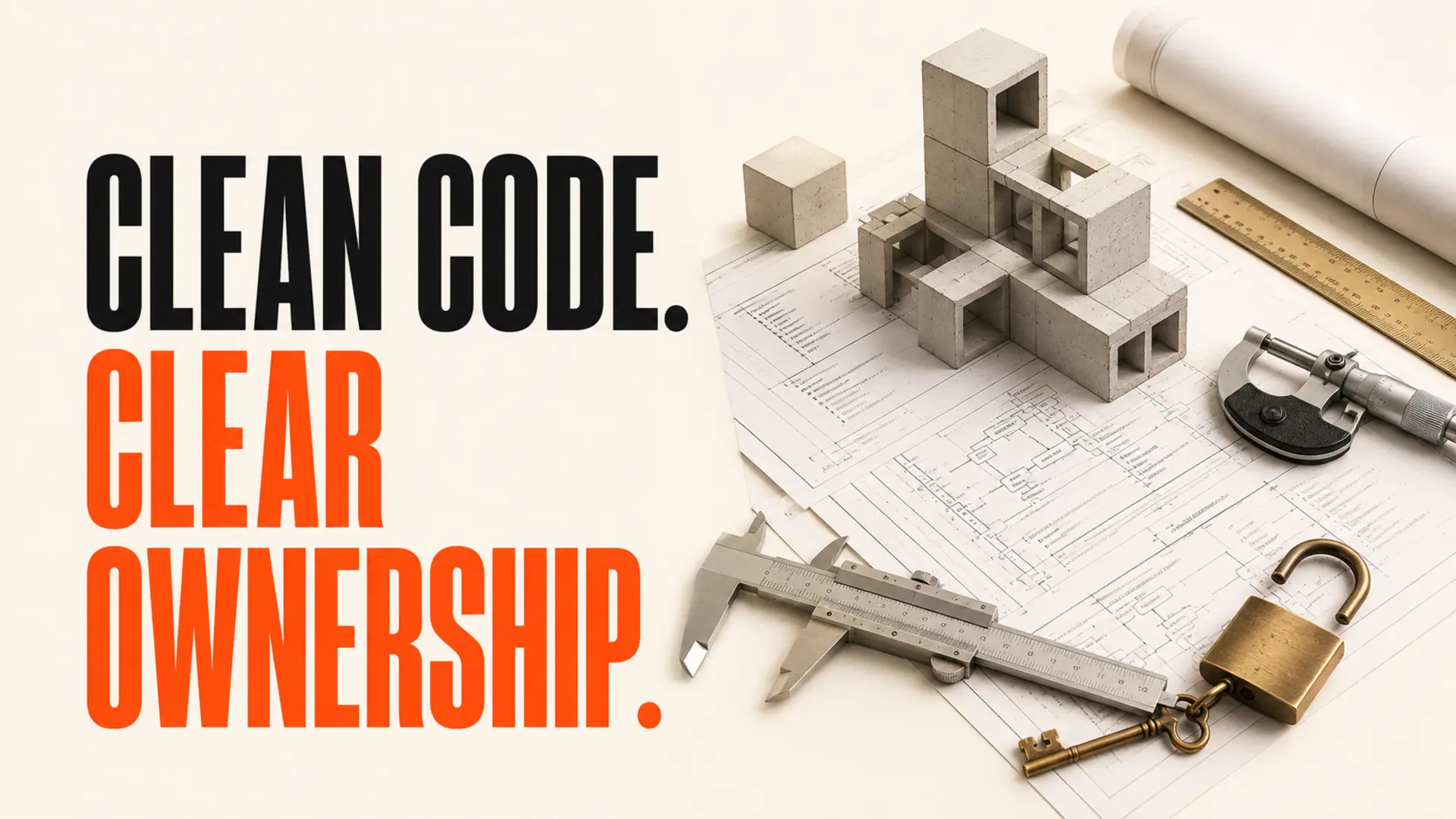
When we engineer digital web assets at TruWebz Studios Inc., we build on an Anti-Retainer Philosophy:
THE TRUWEBZ CLEAN CODE ARCHITECTURE
1. HAND-CRAFTED SEMANTIC HTML5: Loads in under 0.8s, zero plugin bloat.
2. SERVERLESS CLOUD DATABASE: Supabase / PostgreSQL with auto-backups.
3. IMMUTABLE JSON-LD LOCAL SCHEMA: Hard-coded directly in the header.
4. a variable percentage ASSET OWNERSHIP: Registered on your official CIRA .CA domain.
Why Clean Code Runs for Years Without Breaking:
- Zero Plugin Conflicts: Hand-crafted HTML5 and modern CSS do not "expire" or break when browsers update.
- Serverless Reliability: Cloud databases (like Supabase) handle security patches, SSL certificate renewals, and daily backups automatically on global enterprise networks (Cloudflare/Vercel).
- True Asset Ownership: Your domain is registered directly in your name through accredited registries under the Canadian Internet Registration Authority (CIRA). You own a variable percentage of the code repository and database.
again.
4. The 3-Year Financial Comparison: a variable amount Saved
Let’s look at the financial arithmetic over a 3-year operating horizon:
3-YEAR TOTAL COST OF OWNERSHIP (TCO)
According to economic data from the Business Development Bank of Canada (BDC), small businesses that eliminate recurring vendor dependency maintain over 3.4 times higher operating profit margins and reinvest more capital into high-yield local marketing.
Content Updates Should Take 5 Minutes, Not a variable amount/Month
Let me settle this plainly: whenever you need to update a phone number, change your seasonal pricing, or post a new job gallery photo, you should not have to wait four days for an agency support ticket.
TruWebz web assets are built with streamlined client control panels:
- Log in from your smartphone.
- Edit text or upload a job site photo in thirty seconds.
- Hit publish, and the changes render live instantly.
According to labor statistics from Statistics Canada, independent Canadian companies with autonomous digital infrastructure achieve higher productivity per employee than those bound by restrictive agency contracts.
The Practitioner Move: Own Your Code With TruWebz
Stop paying hundreds of dollars every month for artificial maintenance on fragile, bloated websites.
Invest once in clean, high-performance web engineering that you own a variable percentage from day one.
At TruWebz Studios Inc., we specialize in designing and engineering high-performing websites, local lead engines, and search foundations for ambitious Canadian businesses. We build the clean code, hard-coded local schema, sub-1-second mobile speeds, and automated webhook routing that run reliably for years with zero mandatory retainers.
Visit TruWebz.ca to schedule a code audit, review your current agency invoices, and let’s free your business from the retainer trap today.
Stop paying for engineered fragility. Build on clean code, own your digital foundation, and keep your hard-earned profits in 2026.
Ready to Build a Stronger Online Presence?
Talk with TruWebz about a faster, clearer website built to attract and convert the right customers.
Frequently Asked Questions
How Fragility Is Engineered?
There is no universal result. Evaluate the decision using your own market evidence, operating capacity, costs and applicable professional advice.
What is the 4 Tactics Agencies Use to Create Artificial Dependency?
Watch out for these four common agency tactics designed to keep you trapped in paid retainers:
There is no universal result. Evaluate the decision using your own market evidence, operating capacity, costs and applicable professional advice.
What is the Plugin Overload Architecture?
Agencies use plugins for basic features that should be hand-coded in three lines of CSS (e.g., custom fonts, click-to-call buttons, mobile menus). Each plugin adds heavy JavaScript payloads, dragging mobile speeds down to 4.5 seconds and failing Google Search Central Core Web Vitals.
There is no universal result. Evaluate the decision using your own market evidence, operating capacity, costs and applicable professional advice.
What is the Closed Proprietary CMS Lock-In?
Some agencies build your website on their own internal, proprietary website platform. If you ever try to cancel your monthly retainer, they delete your website and database, leaving you with zero assets.
There is no universal result. Evaluate the decision using your own market evidence, operating capacity, costs and applicable professional advice.
What is Obfuscated Administrative Backends?
Agencies restrict your administrative permissions, forcing you to submit paid support tickets just to change a phone number, update holiday business hours, or upload a job site photo.
There is no universal result. Evaluate the decision using your own market evidence, operating capacity, costs and applicable professional advice.
What is Hostage Domain Registrations?
Agencies register your domain name in their agency’s corporate account instead of your legal name, holding your brand equity hostage if you ever dispute an invoice.
There is no universal result. Evaluate the decision using your own market evidence, operating capacity, costs and applicable professional advice.