
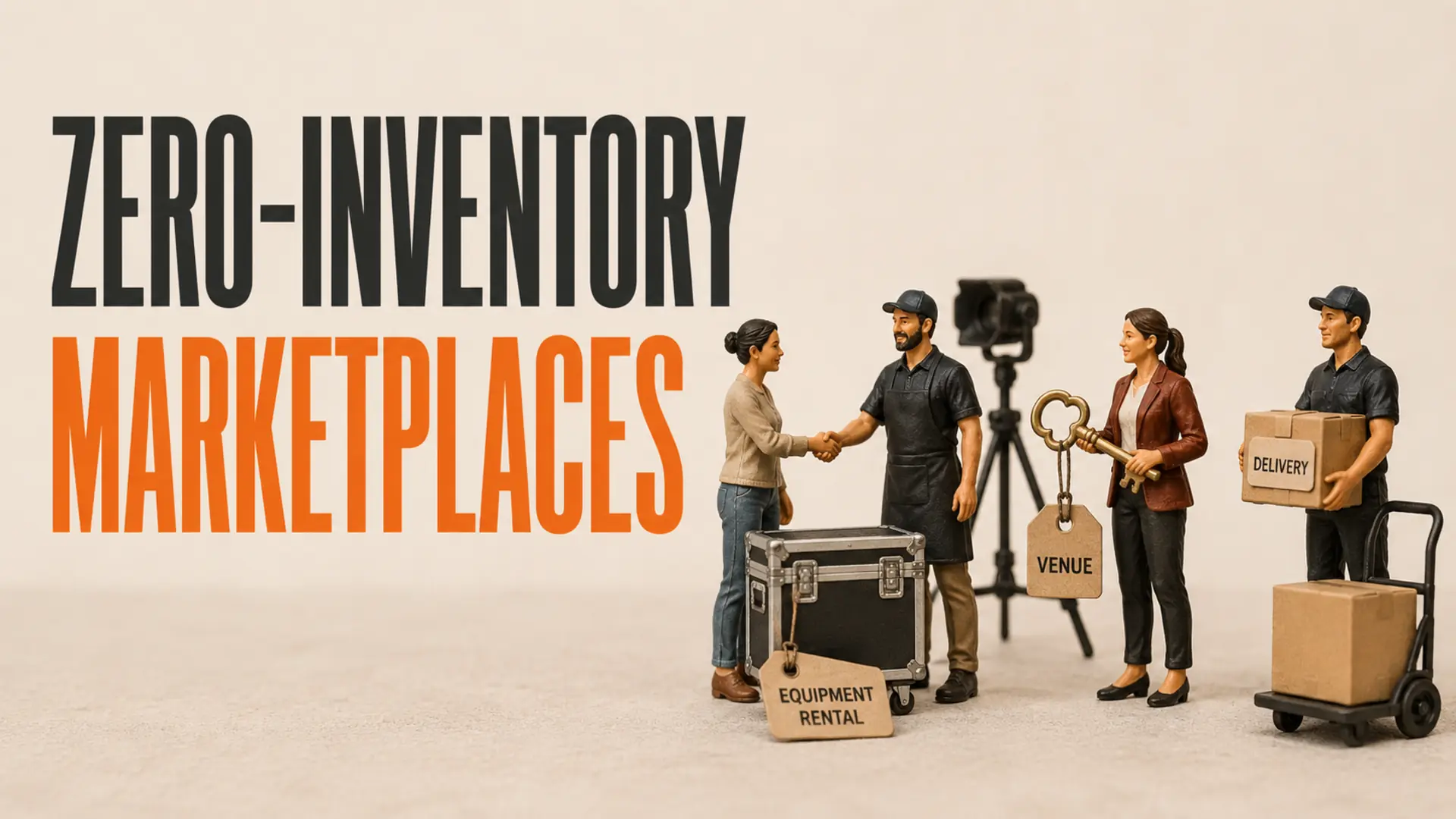
The short version: A zero-inventory online marketplace connects buyers with independent suppliers without purchasing or warehousing the underlying equipment, space or service. The opportunity is coordination—not effortless profit. A viable marketplace still needs verified supply, useful demand, clear rules, privacy controls, safe payments, support and dispute processes.
These zero-inventory online marketplace ideas are starting points for founders who want to coordinate access rather than stock products. The model can reduce inventory risk, but it does not remove the work of building trust between two sides.
Before developing accounts, calendars or payments, test whether suppliers will participate and whether buyers have a recurring problem worth solving. This guide keeps all 15 ideas practical while highlighting the operational obligations behind them.
What Is a Zero-Inventory Online Marketplace?
A marketplace helps two groups find and transact with each other. The operator may manage listings, enquiries, bookings or payments, while the supplier retains ownership and responsibility for the underlying asset or service.
That distinction should be explicit. Customers need to know who provides the service, who handles payment, how cancellations work, what verification means and where responsibility sits when something goes wrong.
If you are still testing the premise, begin with the customer-research process in this guide to validate an online business idea.
Commercial Equipment and Space Marketplace Ideas
1. Heavy Equipment Dry-Hire Exchange
Connect equipment owners with contractors seeking short-term excavators, lifts or skid steers without an operator. Confirm insurance, inspection, transport, deposits, damage reporting and operator-qualification requirements before accepting listings.
2. Short-Term Warehouse and Pallet Storage
Help businesses locate unused pallet positions or temporary industrial storage. Listings should distinguish storage conditions, access hours, security, prohibited goods, insurance and handling responsibilities.
3. Shared Commercial Kitchen Marketplace
Match food businesses with commercial kitchens offering off-peak capacity. Verification may involve local licensing, sanitation, allergen procedures, storage rules, equipment access and cleaning responsibilities.
4. Contractor Yard and Material-Staging Exchange
Connect property owners with contractors needing temporary laydown or staging space. Validate zoning, access, surface capacity, fencing, environmental restrictions, security and restoration terms.
Trade and Subcontractor Marketplace Ideas
5. Mobile Crane and Rigging Dispatch Hub
Help qualified operators and contractors coordinate crane and rigging availability. The marketplace needs strong credential review, scope details, site-condition information and a clear boundary between matching and professional lift planning.
6. Mobile Welding and Fabrication Network
Connect businesses with mobile welders and fabricators by service area, process and availability. Avoid implying certification without verification, and make inspection, materials, permits and job-site safety responsibilities clear.
7. Paving Crew Capacity Exchange
Match contractors with independent paving or sealcoating crews for overflow work. Useful fields include crew size, equipment access, service area, insurance, schedule, project type and subcontracting terms.
8. Septic and Waste-Pumping Dispatch
Coordinate customers with appropriately licensed vacuum-truck or pumping operators. The platform should collect only necessary information and account for regulated disposal, emergency limitations and service-area constraints.
Venue and Event Marketplace Ideas
9. Rural and Barn Venue Marketplace
Help property owners present distinctive event spaces with accurate capacity, access, parking, noise, insurance and permit information. Buyers need transparent availability, inclusions, restrictions and cancellation terms.
10. Film and Photography Location Library
Connect property owners with production teams seeking specific visual environments. Listings should address crew size, equipment access, insurance, neighbourhood impact, releases, overtime and restoration.
11. Food-Truck Event Booking Exchange
Match event organizers with local food trucks using cuisine, capacity, service area and availability. Verify permits and insurance where applicable, and clarify minimums, utilities, waste handling and cancellation rules.
12. Audio-Visual and Stage Supplier Marketplace
Help planners compare regional production suppliers for sound, lighting and staging. Accurate quotes require event details, technical requirements, venue access, labour, setup, testing and teardown—not just a hardware list.
Specialized B2B and Logistics Marketplace Ideas
13. Trade Apprenticeship and Sponsor Matching
Connect apprentices with employers open to sponsorship or placement. Employment and apprenticeship rules vary, so the platform should use current official requirements, avoid guaranteeing placement and protect sensitive applicant information.
14. Medical and Laboratory Calibration Directory
Help clinics and laboratories find qualified calibration or maintenance providers. Verification must be specific to the device, standard and jurisdiction; the marketplace should not imply that a listing replaces regulatory due diligence.
15. Urgent Freight and Courier Exchange
Match businesses with independent carriers for time-sensitive deliveries. Define vehicle capacity, coverage, proof of delivery, insurance, prohibited goods, chain of custody and service-area limits.
Compare the 15 Marketplace Categories
| Category | Primary trust requirement | Useful first test |
|---|---|---|
| Equipment and industrial space | Condition, access, insurance and responsibility | Manually match a narrow local category |
| Trades and dispatch | Credentials, scope and job-site safety | Interview buyers and verified providers |
| Venues and events | Availability, capacity, permits and cancellations | Curate accurate listings in one region |
| B2B and logistics | Qualification, privacy and service reliability | Test structured enquiry routing |
Several of these concepts may work better as curated directories before becoming transactional marketplaces. Review these local directory website ideas to compare the lighter operational model.
Validate Supply and Demand Before Building the Platform
A marketplace has a sequencing problem: buyers expect useful supply, while suppliers expect buyers. Start within one region and one narrowly defined category. Interview both sides separately and learn how they currently discover, evaluate and pay each other.
A responsible validation sequence
- Define one buyer, one supplier type and one recurring transaction.
- Recruit a small group of willing suppliers manually.
- Verify listing details instead of accepting unreviewed claims.
- Present the supply to potential buyers and observe real enquiries.
- Facilitate early matches manually and document every exception.
- Decide whether the evidence supports better search, accounts, booking or payments.
Do not mistake supplier sign-ups for marketplace demand. Measure qualified enquiries, successful matches, repeat use, cancellations, disputes and the human time required per transaction.
Choose a Marketplace Revenue Model Carefully
Common options include listing subscriptions, lead fees, booking commissions or supplier services. Each changes incentives and responsibilities. A commission model may require deeper payment, refund and dispute handling than a directory subscription.
If recurring access is part of the plan, compare the billing and retention demands in these subscription website business models.
Model total costs before setting fees: payment processing, refunds, fraud, identity checks, support, insurance, moderation, accessibility, security, tax administration and supplier acquisition can materially affect the economics.
Build Trust Into the Marketplace
Supplier verification
Define exactly what is checked, how often it is refreshed and what a verification badge means. Do not present self-reported information as independently confirmed.
Privacy and security
Collect only the information needed for the transaction. Protect identity documents, insurance records, payment data and private addresses with appropriate access controls and retention rules.
Payments, cancellations and disputes
Explain who charges the customer, when funds move, how refunds work and how disputes are escalated. Avoid promising automated split payments or escrow until the payment provider, legal structure and operational process have been confirmed.
Listing accuracy and moderation
Create a way to report incorrect, unsafe or unavailable listings. Review high-risk categories more carefully and document removal and appeal procedures.
Start With the Smallest Useful Marketplace
The first version may be a curated set of verified listings and a structured enquiry form—not a full self-serve platform. Manual matching can reveal the fields, filters and exceptions that software eventually needs to handle.
Add accounts, availability calendars, payments or reviews only when repeated use justifies the complexity. A marketplace becomes valuable through reliable matches and trust, not through the number of features on its launch day.
Ready to Test a Marketplace Idea?
Talk with TruWebz about validating a focused marketplace and planning the smallest useful website.
Frequently Asked Questions
What is a zero-inventory online marketplace?
It connects buyers with independent suppliers while the suppliers retain ownership of the underlying equipment, space or service. The operator coordinates discovery or transactions without warehousing the assets.
Can I test a marketplace without custom software?
Yes. A curated directory, structured enquiry form and manual matching process can test supply, demand and workflow before accounts, calendars or payments are built.
Should a new marketplace recruit suppliers or buyers first?
Usually, recruit enough verified supply to make the buyer experience useful, while interviewing buyers at the same time. The sequence depends on the category and should be tested locally.
How can a zero-inventory marketplace make money?
Possible models include subscriptions, listing fees, qualified-lead fees, booking commissions and supplier services. The right model depends on transaction value, support burden and customer expectations.
What are the biggest marketplace risks?
Common risks include inaccurate listings, weak supplier verification, privacy problems, fraud, cancellations, disputes, inconsistent service and unclear responsibility between the platform and supplier.
Which marketplace idea should I choose?
Choose a category where you can reach both sides, understand the transaction and verify suppliers. Test one region and one narrow use case before expanding.