The short version: A one-person business can own and operate a successful app when the product has a narrow purpose, manageable support expectations and dependable systems. Managed services can reduce infrastructure work, but the owner remains responsible for customers, security, privacy, billing, accessibility, maintenance and continuity.
Can a one-person business own a successful app? Yes—but “successful” should mean that the product solves a useful problem and can be operated responsibly within one person’s real capacity. It does not mean the app runs itself or guarantees recurring income.
The strongest solo apps avoid unnecessary scope. They serve a defined audience, perform a small number of repeatable jobs and make operational limits visible from the beginning. Before building, validate the problem and decide what the owner must handle when technology or customer expectations change.
What Makes an App Realistic for a One-Person Business?
A solo founder has limited development, support and decision-making capacity. The app should therefore minimize exceptions rather than simply minimize screens.
- Narrow audience: users share a recognizable workflow and vocabulary.
- Focused outcome: the app solves one important job rather than becoming a general platform.
- Predictable data: inputs, permissions and outputs can be defined and tested.
- Manageable support: the founder can respond without being continuously on call.
- Low operational ambiguity: billing, refunds, deletion and failure states have clear procedures.
- Controlled risk: the product avoids regulated or safety-critical decisions unless qualified oversight is available.
The strategy closely follows the case for choosing a small first online business: build the smallest useful version, gather evidence and expand only when repeated demand justifies it.
Three App Types That Can Suit a Solo Operator
1. Specialized calculator or document workflow
A focused tool can turn structured inputs into a useful estimate, checklist or document. It should explain assumptions and limitations, preserve source data appropriately and avoid presenting unverified outputs as professional certification.
Examples include material estimators, planning worksheets and standardized proposal workflows. The owner still needs to maintain formulas, test exports, answer questions and correct errors.
2. Niche checklist and record-keeping utility
A small app can help a team complete repeatable inspections, logs or internal checklists. If the subject relates to legal or regulatory compliance, the product must be reviewed against current requirements and should not imply that software use alone guarantees compliance.
3. Curated supplier directory or enquiry tool
A one-person business may begin with verified listings and structured enquiries. Supplier accuracy, moderation, privacy and customer expectations can create more work than the software itself, so manual validation should precede self-service features.
For a more complex two-sided model, compare the operational obligations in these zero-inventory marketplace ideas.
Validate the App Before Building Its Full Feature Set
Do not use development as a substitute for customer research. Speak with potential users, observe the current workflow and test whether they will take a meaningful action for a narrower solution.
- Define one audience and one recurring problem.
- Map how the work is completed today, including exceptions.
- Test a manual or low-code version of the outcome.
- Measure use, completion, repeat demand and support questions.
- Set criteria for continuing, changing or pausing the idea.
- Build custom software only where it removes verified friction.
Use this evidence-first guide to validate an online business idea before spending heavily.
The Solo App Operating System
Product scope and change control
Keep a written definition of the core user, supported use cases and features the app will not provide. Evaluate requests by frequency, business value, risk and maintenance cost instead of accepting one-off custom work automatically.
Support and documentation
Create onboarding instructions, common troubleshooting steps and a realistic response window. Email support can work for some products, but urgent or high-impact workflows may require coverage a solo operator cannot provide.
Security and privacy
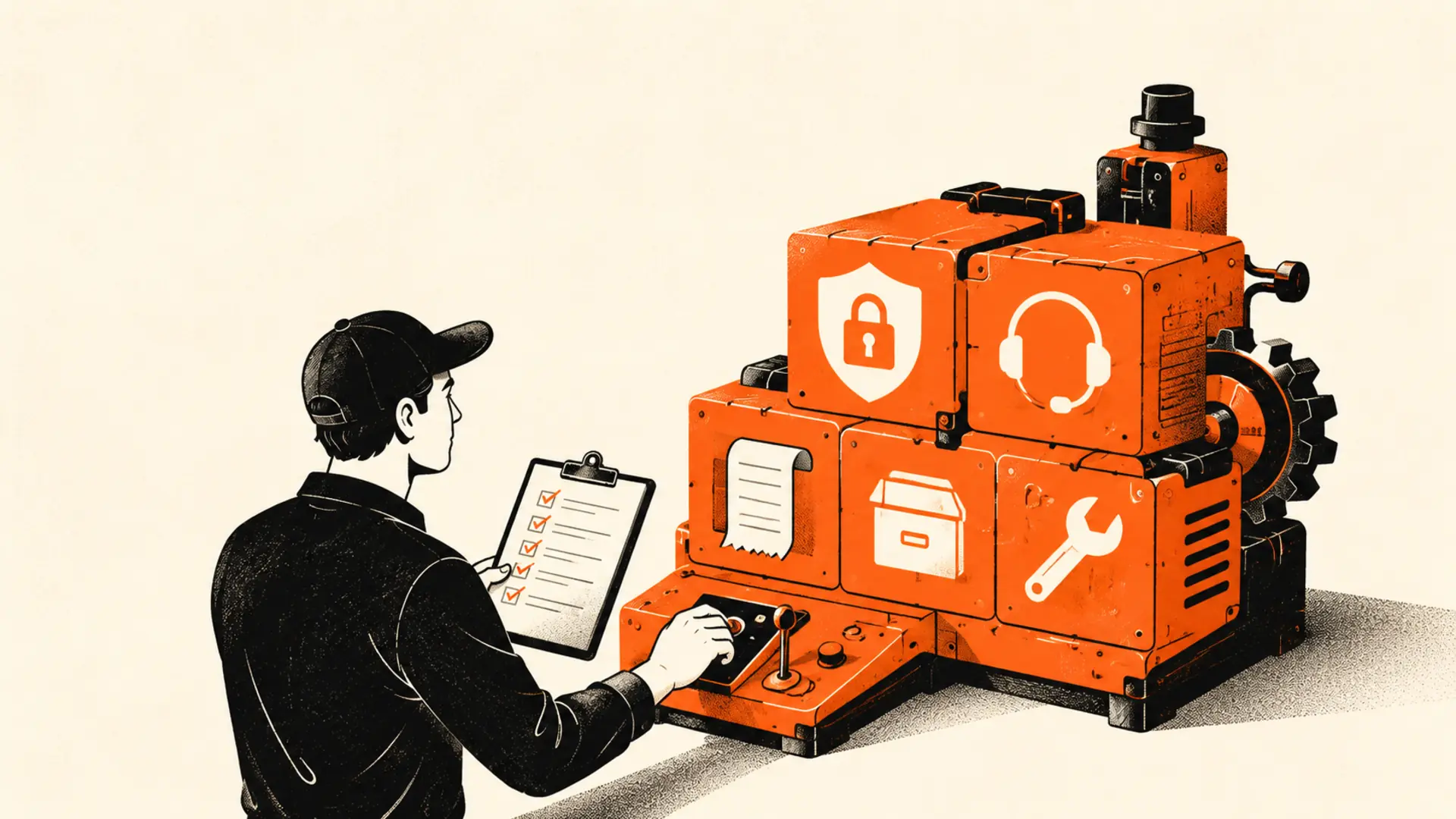
Use appropriate authentication, least-privilege access, encrypted connections, logging, backups, dependency updates and incident procedures. Managed hosting and databases can reduce maintenance, but configuration, application security and data governance remain the owner’s responsibility.
Billing and customer administration
A payment provider can process transactions and offer billing tools, but it does not automatically make every tax, refund, subscription or consumer-protection obligation disappear. Define cancellation, failed-payment, refund and invoice processes for the business and jurisdictions served.
Accessibility and quality
Test keyboard access, labels, contrast, error handling, responsive layouts and key assistive-technology journeys. Automated checks help, but human testing is still needed.
Monitoring and recovery
Monitor uptime, errors, performance, backups and unusual activity. Regularly test whether data can actually be restored. Document what users should expect during an outage and how critical issues will be communicated.
Managed Services Help, but They Do Not Remove Ownership
Modern hosting, databases, authentication and payment services can reduce the amount of infrastructure a solo founder operates directly. They also create vendor dependencies, usage costs, configuration responsibilities and migration questions.
| Managed component | What it may reduce | What the founder still owns |
|---|---|---|
| Hosting and delivery | Server provisioning and some scaling work | Application reliability, configuration and cost control |
| Managed database | Routine infrastructure administration | Schema, permissions, retention, backups and recovery testing |
| Authentication service | Some account and session plumbing | Access design, account recovery and abuse handling |
| Payment provider | Card processing and billing mechanics | Offers, refunds, taxes, disputes and customer communication |
| Monitoring service | Error and uptime visibility | Investigation, remediation and incident response |
If AI-assisted development is part of the plan, review what AI can and cannot reliably build without human review.
Plan for the Risks of Having One Operator
A one-person app has a key-person risk: illness, travel or an emergency can interrupt support and maintenance. Build continuity before it is needed.
- Keep credentials in a secure, recoverable password-management system.
- Document deployment, backup, billing and incident procedures.
- Maintain a current inventory of vendors, domains and renewals.
- Set spending and usage alerts.
- Identify a trusted technical contact for urgent recovery.
- Give customers honest support and availability expectations.
Measure Sustainable Success
Revenue alone is not enough. Track activation, repeat use, cancellations, support volume, error rates, operating costs and the owner’s time. A product that grows while creating unmanageable obligations may need a smaller scope, different pricing, outside help or a deliberate pause.
A solo app becomes more durable when customers receive consistent value and the operator can maintain quality without depending on constant heroics.
Can One Person Run the App Long Term?
One person can own an app, but ownership does not require doing every task forever. Contractors, accountants, legal advisers, security specialists and support coverage can be added when the risk or workload justifies it.
The practical solo playbook is simple: validate one useful problem, design for a manageable operating model, automate stable work, document the rest and add help before quality or safety begins to slip.
Ready to Plan a Focused App?
Talk with TruWebz about validating a manageable application and planning the systems needed to operate it responsibly.
Frequently Asked Questions
Can one person build and run an app?
Yes, when the app has a focused purpose and manageable support, security and maintenance needs. Managed services can help, but the owner still needs operating procedures and realistic limits.
What type of app is easiest to operate alone?
A narrow B2B utility with predictable inputs and limited exceptions is generally more manageable than a social network, safety-critical product or complex two-sided marketplace.
Does managed hosting make an app maintenance-free?
No. It can reduce server administration, but the founder remains responsible for application code, configuration, security, backups, vendor costs, monitoring and incident response.
How should a solo app provide customer support?
Use clear documentation, a defined support channel and an honest response window. Products involving urgent or high-impact workflows may require backup coverage beyond one person.
When should a solo founder hire help?
Add help when specialist review, emergency coverage, compliance, support volume or maintenance demands exceed the founder’s competence or sustainable capacity.
How do you validate a solo app idea?
Interview potential users, observe the existing workflow, test the outcome manually and measure meaningful use before investing in a complete feature set.